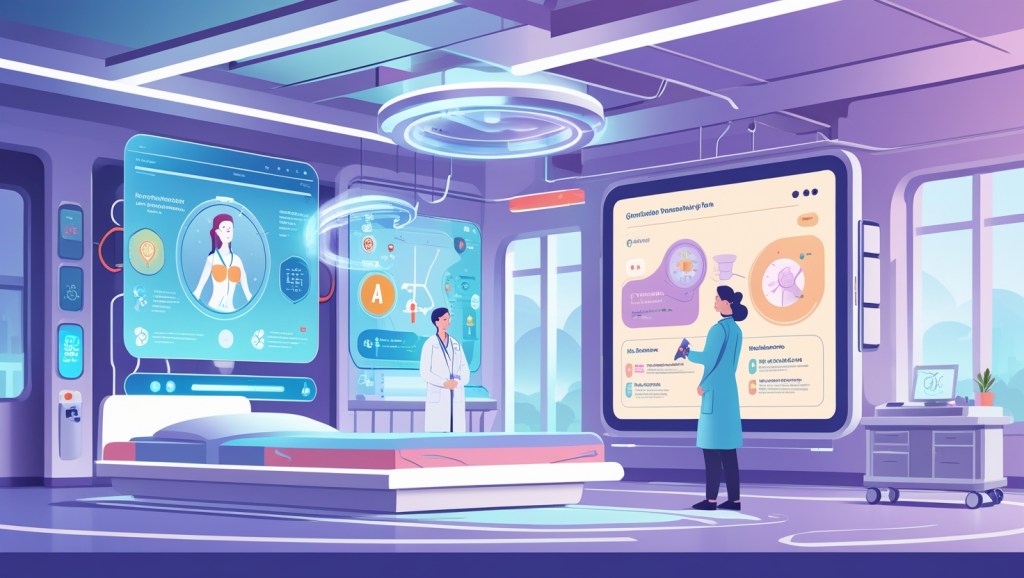
Generative AI is revolutionizing industries with its creative, forecasting, and tailoring abilities like never before! It has been used to optimize health research, create amazing entertainment experiences, and its applications are as diverse as they are groundbreaking. Fun fact: Global spending on generative AI is projected to surpass $200 billion this year! In this article, we’ll explore the top eight uses of generative AI in real life, and how it’s changing and transforming the way we work and live. Let’s find out what this buzz around generative AI is and how the technology is already transforming out future.
Generative AI Explained
The appearance of ChatGPT in 2022 marked the beginning of the history of generative AI adoption and become a turning point for both businesses and individuals alike.
So, how does generative AI work? It is a category of artificial intelligence that creates new content, such as text, images, videos, and audio, based on the provided training data. Gen AI tools use large language models (LLMs) to predict the next element in a sequence and create coherent output.
While a traditional model is trained to perform cognitive tasks, generative AI focuses on creating new content, which is most beneficial for industries that rely heavily on language, such as law, education, medicine, and more.
Generative AI in Healthcare
Generative AI technologies have opened new opportunities for the healthcare industry to enhance patient treatment. Here are some of the major applications of generative artificial intelligence and machine learning models in medicine:
- Personalized Treatment. Generative AI systems can analyze patient data and identify patterns related to genetic, environmental, and lifestyle factors to predict the risk of complications. For example, for patients with diabetes, AI models can forecast whether there might be cardiovascular disease in the future and suggest individual treatment plans.
- Drug Discovery. Leading pharmaceutical companies are now using AI to create new drugs and enhance existing medication. AI can generate desired molecular compounds by identifying potentially efficient specimens and predicting potential side effects. Unlike traditional drug development that often takes over 10 years and costs a lot, adoption of generative AI can reduce this process to months and, potentially, hours.
- Medical Image Analysis. AI and machine learning also assist radiologists in diagnosing illnesses from X-rays and MRIs. Generative models receive huge amounts of training data from patients to detect potential diseases earlier and more accurate, which can lead to better patient outcomes. For example, the PANDA technology recently achieved groundbreaking 92.9% accuracy for cancer-positive cases and 99.9% for non-cancer cases.
Generative AI Applications in Education
Generative AI tools can personalize educational paths for students and make them shorter, more efficient, and tailored to individual needs. Here are a few use cases for gen AI:
- Personalized Learning Materials. Teachers can now create tons of customized study guides, workbooks, quizzes, and other learning materials to support their students’ individual journey. Gen AI analyzes student’s performance and skills and adjusts the learning materials to the right level.
- Virtual Tutors. For students who are unable to commute to schools, generative AI can be used to simulate a virtual teacher and make self-learning process accurate. Large language models are now available in most popular languages, making education more and more accessible to students around the world.
- Enhance Training. Generative AI solutions can also create immersive simulations to provide training environment for doctors, pilots, and other professionals. AR/VR and AI can also create immersive environments for scientific experiments or historical recreations.
Revolutionizing Marketing and Advertising
Generative models are already actively being used in advertising and marketing by big and small companies. The use cases for generative AI include personalized ads, content automation at scale, enhanced customer engagement, and more.
- Personalized Ad Campaigns. Marketers use generative AI to create personalized messages based on consumers’ demographics, behavior, and preferences. This allows for more targeted advertising and higher conversion rates.
- Automated Content Creation. Generative AI models can produce huge volumes of content at scale in a matter of minutes and allow brands to scale their campaigns. Such models work based on deep learning technology that allows them to learn patterns in training data and recreative brand’s voice in generated content.
- Increased Customer Engagement. More and more companies are integrative AI chatbots to provide their customers with real-time support in their native language. Also, generative AI can create customized product recommendations for users and enhance their shopping experience.
Generative AI in Media and Entertainment
The impact of generative AI in the entertainment industry includes new horizons of personalization, creativity, and efficiency:
- Immersive Experiences. Augmented Reality (AR) and Virtual Reality (VR) advancements allow producers to create environments where humans can mingle with AI-generated characters and develop unique stories in real time. These experiences can also include videos starring particular individuals and iconic figures from the past for higher engagement levels of the audience.
- AI-Generated Games. With a lower barrier to entry into gaming production, even small dev teams can produce games from rapid prototyping to testing, refinement, and quality assessment.
- Enhanced Creativity. Generative AI apps can support human creativity and reduce the time, costs, and labor needed to produce engaging content. From early stages of production to publication, generative AI can be applied to storytelling, scripting, reviewing existing content, adding visual effects, composing music, and more.
Optimizing Finance and Business Operations
AI hs also been used in finance to improve investment outcomes, enhance fraud detection, enhance trading experience, predict currency and stock prices, and much more. In contrast to other industries, finance and business operations have higher risks and less tolerance to mistakes, so running generative AI models can be especially beneficial.
- Automated Transactions. Many generative AI models can increase the efficiency in accounting by reducing errors, providing accurate and continuous cash flow management, and automating transactions.
- Real-time Accounting. Deep generative models also make it possible to run tax accounting with minimal human intervention and enable real-time tax compliance and reporting.
- Better Forecasting. AI agents can identify trends and make better forecasts for comprehensive risk management. Advancements in predictive analytics also allow for automated budgeting and improved allocation.
Redefining Manufacturing and Logistics
Large language models and generative AI can accelerate manufacturing process, support engineering in developing better prototypes, and support efficient logistics.
- Product Design. Manufacturers can use generative AI to design thousands of potential designs optimized for their specific constraints and accelerate the production process. From initial market research and customer analysis to generating, testing, and refining ideas, the models can speed up the manufacturing process from years to months or even days. Other benefits of generative AI for producers include reduced material usage, optimized functionality, improved customer service, and more.
- Supply Chain Management. Generative AI tools can enhance demand forecasting based on market insights and help businesses align production schedules with market needs. Furthermore, such models can streamline inventory management by tracking inventory levels in real-time.
- Warehouse Automation. Companies can use generative AI to produce smart warehouses with automated temperature adjustments and cooling processes, reduced energy consumption, optimized paths and workflows, and quicker and more precise goods transportation.
Retail Innovations Powered by Generative AI
The power of generative AI can also be applied in retail, where companies are now offering options of visual try-on, automate customer service, and provide personalized product recommendations.
- Visual Search and Try-On. Companies use generative AI services to enable visual search for clothing and makeup, so that customers can try on a piece they like in a virtual environment and make better purchase decision. For example, Sephora Virtual Artist app uses facial recognition technologies to help customers try on different make up products without leaving their house. Mercari offers a virtual shopping assistant – Merchat AI – that guides users to desired products to make their search faster and simpler. It can also offer suggestions, such as gift ideas, home decor options, and more.
- Customer Service Automation. Ecommerce stores can integrate AI chatbots that generate human-like responses and provide customers with persinalized assistance 24/7. This reduces workload on customer service, improves users’ experience, and allows brands to better understand customer inquiries.
- Product Recommendations. Generative AI capabilities include customer preferences analysis and personalized product suggestions. This leads to increased conversions and more opportunities for cross-selling and upselling. For example, Carrefour’s chatbot Hopla created by generative AI can suggest relevant products in real-time based on customers’ budget and preferences.
Generative AI in Legal and Administrative Tasks
Perhaps, one of the most interesting generative AI use cases can be found in legal practice. Gen AI tools can enhance access to justice for everyone and make legal advice and assistance available for free. Some courts have already published guidelines for litigants who use AI systems like ChatGPT to self-represent in court.
Here are a few examples of generative AI use cases in the legal context:
- Drafting and Reviewing Documents. Crafting legal documents have always been meticulous and time-consuming work. Tools like Spellbook and Juro now allow users to generate initial drafts of legal documents based on pre-built templates in minutes.
- Legal Research. AI models like GPT can review case law, statutes, and legal literature to identify precedents and summarize key points to enhance the quality of legal advice. Unlike traditional keyword research on search engines, conversational AI tools allow for interactive experiences and faster and more relevant search.
- Advisory. AI can also help provide complex advice, just like an experienced lawyer. Normally, lawyers rely on years of experience to write convincing arguments, but now users can rely on generative AI models even for complex legal reasoning.
Ethical Considerations and Challenges of Generative AI
As exciting as it sounds, the potential of generative AI application is not unambiguous. There are quite a few important ethical concerns that the society should consider to make sure generative AI models like GPT are used for better, not worse.
- Addressing Bias. Generative AI creates new content based on the training data provided. If datasets include any type of bias, such as racial, gender, etc., the output will reproduce it. Therefore, it is crucial not only to control input data but also carefully analyze outputs.
- Balancing Automation and Human Insights. While generative AI models produce huge volumes of content fast, their use should not come down to full automation without human intervention. Such content can become a great basis but never a full replacement.
- Ensuring Data Privacy. From data processing to personalized marketing, generative AI works by analyzing customer data. Companies must ensure compliance with laws such as GDPR in how customer data is gathered and processed to avoid legal risks. Hyper-personalization in marketing can also lead to negative outcomes.
Future of Generative AI
Generative AI is not just a far-off dream anymore—it’s already here, disrupting industries across the globe in 2025. From healthcare advancements to personalized shopping experiences, its potential has no limits. By adopting all these innovations ethically, we can harness unprecedented opportunities with solving ethical dilemmas. Are you prepared to discover how generative AI will transform your industry? Let the future begin!
 Prompt Genius
Leave a comment